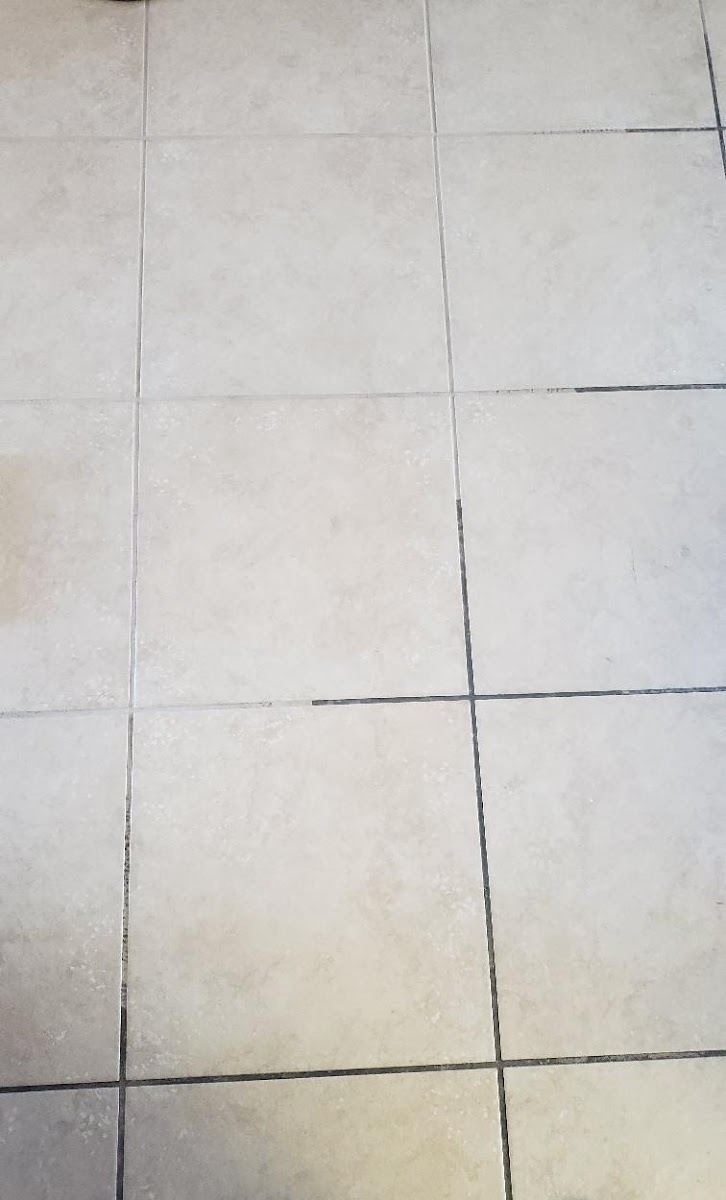
I'm Michael Recek, owner of SurfaceTech Cleaning. I've been cleaning floors and surfaces around Fresno and Clovis since 2019, and tile in kitchens and bathrooms is one of the jobs people put off the longest. The tile itself usually looks fine. It's the grout lines between the tiles that go dark, and once that happens, no amount of weekend scrubbing seems to bring them back.
Here's the honest version of what's going on, what you can do yourself, and where a professional clean actually earns its keep.
Why grout darkens in the first place
Grout is porous. Even when it's sealed, it acts like a sponge over time, soaking up cooking grease in the kitchen and soap scum, body oils, and mineral residue in the bathroom. The tile surface wipes clean because it's glazed and non-porous, but the grout holds onto everything that lands in those recessed lines.
In the Central Valley, our hard water makes it worse. Minerals build up along shower grout and around faucets, and that film traps dirt and sometimes feeds mildew in the damp corners of a bathroom. So you're often fighting three things at once: organic grime, hard-water scale, and discoloration that has soaked below the surface.
Takeaway: if your tile looks clean but the lines look dirty, the problem is almost always porous grout holding soil you can't reach by wiping.
What you can fix yourself, and what you can't
A stiff nylon brush, a pH-neutral cleaner, and some patience will handle light, recent buildup. I tell people to skip the steel brushes and the harshest acids. They can erode the grout and etch certain tiles, and on natural stone they'll do real damage. Avoid colored bleaches too, since they can leave grout looking blotchy.
Where DIY hits a wall is depth. A hand brush cleans the top layer, but soil that has wicked down into the grout stays put. That's the grime that makes a line look gray again a week after you scrubbed it. No spray-and-wipe product pulls soil back out of a porous surface, it just sits on top.
Takeaway: surface grime is a homeowner job; soil that has soaked in needs extraction, not more scrubbing.
How I actually clean tile and grout
On a typical kitchen or bathroom floor, I pre-treat the grout with a ProChem solution and give it time to break down the grease and buildup. Then I run an MH Pro Force 360 rotary tool that uses pressurized hot water to agitate the lines and vacuum the loosened soil and dirty water away in the same pass. That extraction step is the part you can't replicate by hand, because it lifts soil out of the grout instead of pushing it around.
For showers and backsplashes where a floor machine won't reach, I work the grout by hand with the right solution and rinse thoroughly. After the grout is clean and dry, sealing it is worth considering. A fresh sealer slows down how fast everything soaks back in, which is especially useful with our hard water.
I'm the one who shows up and does the work, and I'm trained through the IICRC. The same cleaning is something I bring to homes and to commercial floors across the area. You can see the full scope on the tile and grout cleaning page.
Takeaway: pre-treat, agitate, extract, then seal. The extraction is what separates a real clean from a temporary one.
Family- and pet-conscious, start to finish
A lot of folks ask what I'm putting on their floors, especially with kids crawling around or a dog that licks everything. I'm a family- and pet-conscious operation, so I'm careful about the products I use and I rinse thoroughly so nothing's left sitting on the surface where people and pets live.
If you've got pet accidents that have reached the grout or subfloor, that's a different problem than general cleaning, and I handle that separately through pet odor and stain removal. Grout can hold odor the same way it holds soil.
Takeaway: tell me up front about kids, pets, and any odor issues so I can plan the right approach instead of guessing on site.
When it's worth calling versus waiting
If your grout still responds to a brush and a neutral cleaner, keep doing that and you may not need me for a while. Call when the lines stay dark no matter how hard you scrub, when you're seeing mildew creep back fast, or when you're prepping a house to sell or rent and want the floors looking sharp.
I serve Fresno, Clovis, and the surrounding Central Valley. If you also have carpet or rugs that need attention, it often makes sense to combine visits. You can read about carpet cleaning in Fresno and Clovis if that's on your list too.
Takeaway: persistent dark lines, returning mildew, or a move-in/move-out are the clearest signs it's time for a professional clean.
Frequently Asked Questions
It depends on the grout. A thorough clean and extraction removes the soil and buildup, which usually brings back a lot of the original color and makes a big visual difference. But I won't promise it'll look factory-new, because some grout has permanent staining or has worn down over the years. After cleaning, sealing helps it stay clean longer. I'd rather set an honest expectation than overpromise before I've seen your floor.
For most homes, a professional clean every 12 to 18 months keeps grout from getting to the point where it's hard to recover. High-traffic kitchens and busy bathrooms may want it sooner. Between visits, regular brushing with a neutral cleaner and keeping showers dry and ventilated goes a long way, especially with our hard water in the Valley.
I can seal grout after it's cleaned and fully dry, and I usually recommend it. Sealer doesn't make grout waterproof, but it slows down how quickly grease, soap scum, and minerals soak back in, so your floors stay cleaner between visits. It's especially worth it here because of how hard our water is. Reach out at (216) 483-2200 and we can talk through whether it makes sense for your tile.