
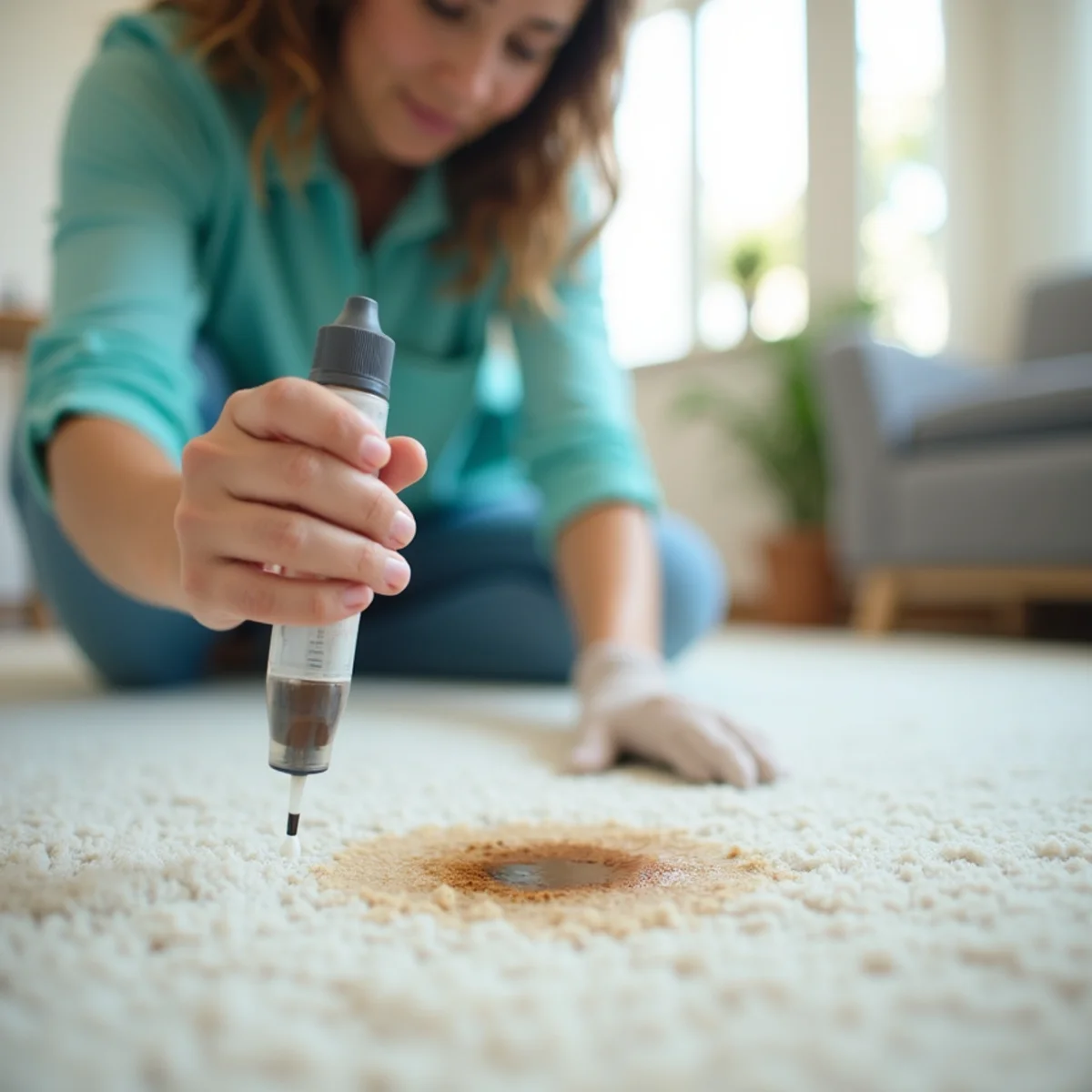
Carpet Stain Removal in Fresno & the Central Valley
The right spotter for the stain — coffee, wine, food, and stubborn traffic-lane marks.
Why Stain Removal Matters
Not every stain responds to the same product. Using the wrong spotter — or scrubbing — can set a stain permanently or damage the fibers. That coffee ring, red-wine splash, or dark traffic lane needs the correct chemistry, applied correctly.
SurfaceTech treats spots and stains by type, with professional spotters and controlled extraction. We’re honest about what will lift completely and what may be permanent — reviewers tell us we brought back carpet they’d already written off.
Stains we treat
- Coffee & tea
- Red wine
- Food & sauce spills
- Traffic-lane soil
- Tracked-in dirt
- Grease & oil
- Ink (case by case)
- Mystery spots
A stain isn't just cosmetic — it's usually still feeding something underneath
When you spill coffee or your dog has an accident, the part you can see on top is only half the problem. Liquids wick down into the carpet backing and the pad below, where a household vacuum and a bottle of spot cleaner can't reach. So the surface looks better for a few days, then the stain 'comes back' as the moisture pulls the leftover residue back up to the tips of the fibers. That residue is also sticky, which is exactly why a spot you scrubbed once becomes the dirtiest patch in the room a month later.
I'm Michael Recek, the owner, and I'm the one who shows up to your home in Fresno or Clovis. My job on a stain call isn't to dump a strong chemical on everything and hope — it's to read what the stain actually is, pick the right spotter for it, and rinse it out fully so it doesn't wick back or leave a crunchy, dirt-grabbing spot behind. I'll also tell you honestly when a stain has set permanently, instead of selling you a treatment that won't change anything.
- Stops the 'reappearing spot' problem by rinsing residue out of the backing, not just lifting it off the surface
- Removes the sticky leftover that turns an old spill into a permanent magnet for soil and traffic
- Treats pet accidents at the source, where the urine soaks into the pad — not just the visible ring on top
- Keeps the wrong product off your carpet, since a bleaching or setting agent on the wrong stain can do damage that can't be undone
- Family- and pet-conscious solutions, chosen for the surface and the people and animals living on it
What a stain-removal visit actually covers
This isn't a generic carpet wash with a sticker price for 'spots.' Here's what I'm doing when you call me out for a specific stain or a carpet full of them.
Stain identification first
Before anything touches the fiber, I figure out what the stain is — tannin, protein, oil, dye, or general soil — because the wrong spotter can set a stain permanently.
Fiber and colorfastness check
I test the carpet or rug in a hidden spot to confirm the fiber type and that the dye won't bleed before I treat the visible area.
Matched spotter selection
I carry different spotters for different chemistry — an oil-cutting solvent does nothing for coffee, and a tannin spotter does nothing for grease.
Targeted pre-treat and dwell time
The right product is worked into the stain and given time to break the bond, rather than wiped off in ten seconds before it can do its job.
Hot-water extraction rinse
My ProChem extractor flushes the loosened stain and the spotter itself out of the backing so nothing is left behind to wick back up.
Traffic-lane and soil-line treatment
The greyed-out paths down your Fresno hallways and in front of the couch get a soil-specific pre-spray and agitation, not just a spot dab.
Pet-accident source treatment
For urine I treat down into the pad where it soaked, since the surface ring is rarely where the smell is coming from.
An honest verdict on what's left
If a stain lifts 90% but won't fully clear, I tell you exactly that and what your realistic options are — no overselling.
Our Stain Removal Process
Steps may vary by surface, soil level, and your home’s specific needs.
- 11
Identify the stain
We determine the stain type so we can pick the right spotter and method.
- 22
Apply the right spotter
We treat with professional, stain-appropriate solutions — no guesswork.
- 33
Lift & extract
We work the spotter and extract, repeating gently where it helps.
- 44
Assess honestly
We tell you the result and whether anything is permanent.
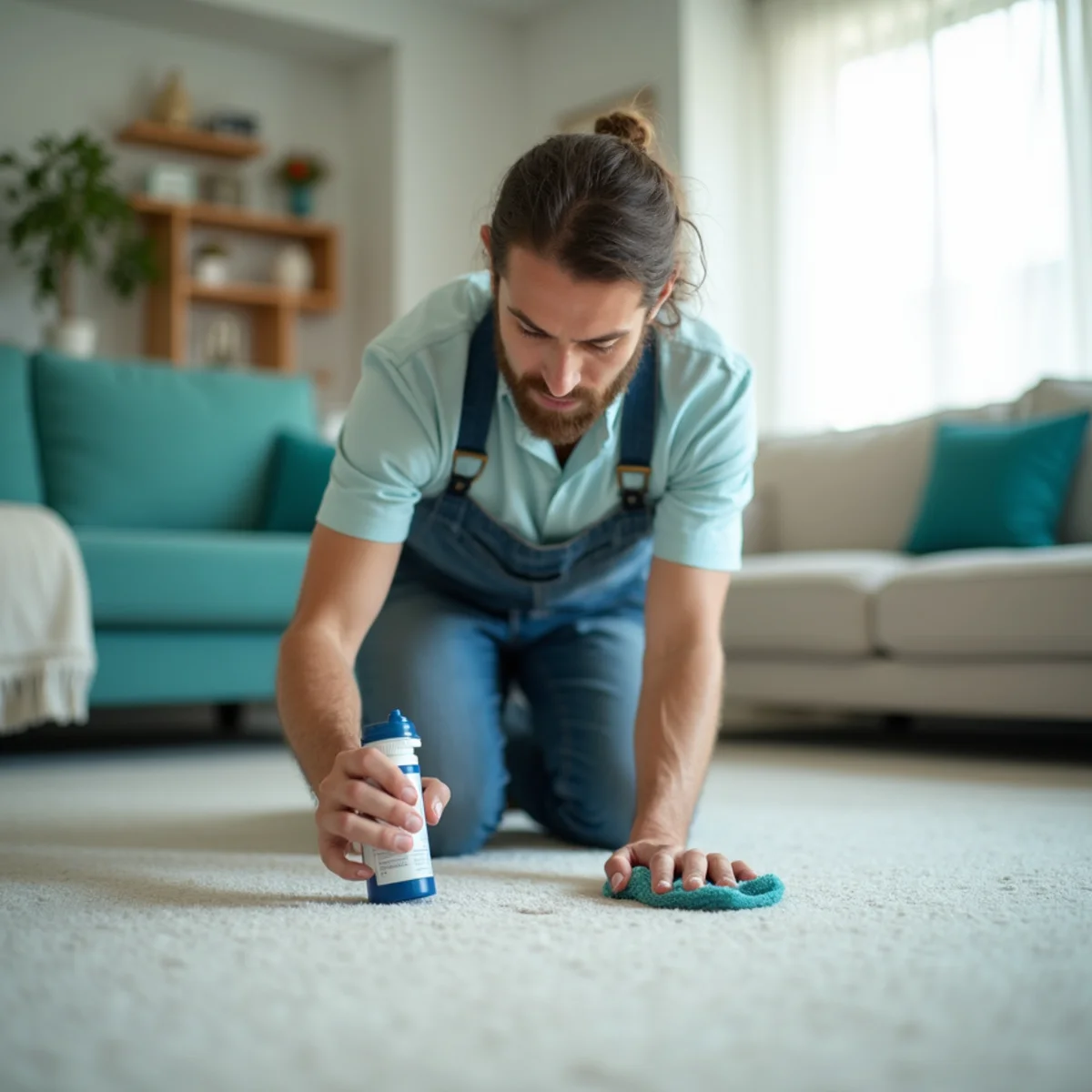
Stains the Central Valley specializes in
Fresno and Clovis homes deal with a particular mix. The fine agricultural dust and clay-heavy soil out here grinds into traffic lanes and turns them grey, and our hard water can leave its own dulling film. Add summer barbecues, kids tracking in from the field, red wine on the patio, and pets, and the spots I get called for around here are pretty consistent: coffee by the kitchen, traffic greying down the main hallway, food and grease near the dining area, and pet accidents that soaked in weeks before anyone called.
Because I'm owner-operated, the person who answers the phone, looks at your stain, and treats it is the same person — me. There's no rotating crew and no script. I'm IICRC-trained, I've been doing this in the Central Valley since 2019, and I'd rather give you a straight answer about a stain over the phone than book a visit you don't need. Call or text me at (216) 483-2200 and tell me what you spilled.
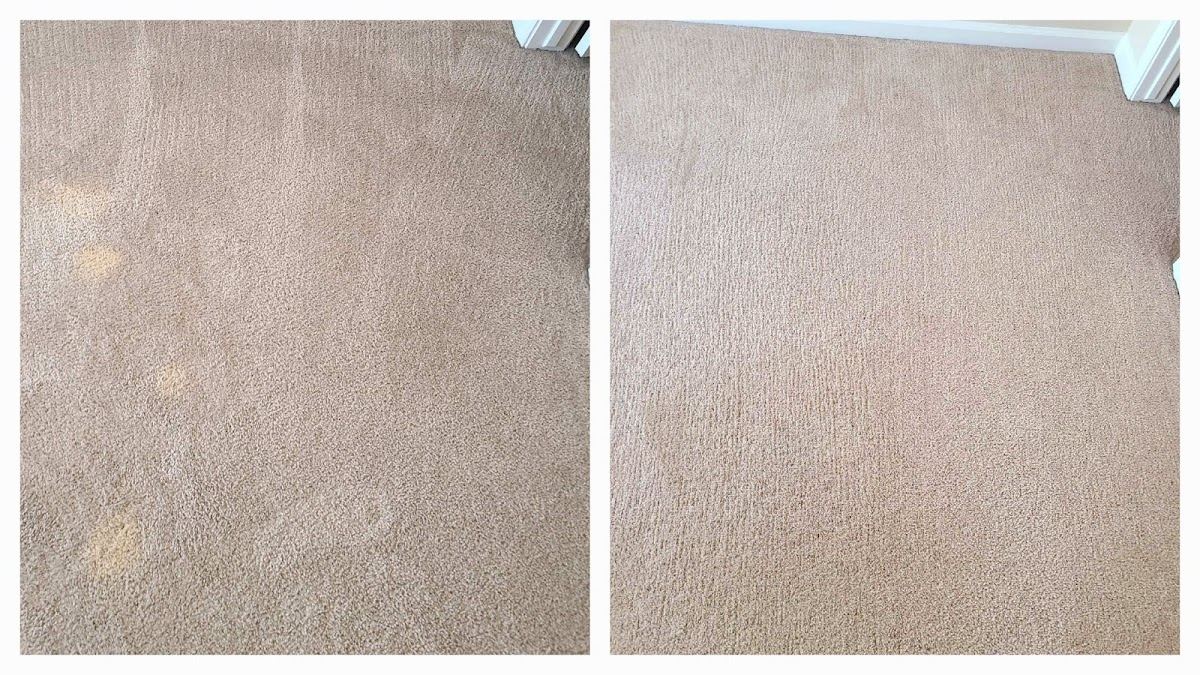
Real Results

Stain categories and how I approach each
Stains aren't all the same problem. The category decides the chemistry — using the wrong one is how a fixable spill becomes permanent. Here's how I think about the main types I see in Fresno and Clovis homes.
Water-based (soft drinks, juice, washable food)
These are usually the most forgiving and respond to a gentle water-based spotter and a thorough rinse, as long as they haven't dried and oxidized for too long.
Tannin (coffee, tea, red wine, fruit)
Tannins dye the fiber fast and need an acidic, tannin-specific treatment — a general or alkaline cleaner can actually lock the brown in.
Oil and grease (cooking oil, food grease, makeup, tar)
Oily stains won't budge with water, so I use a solvent that emulsifies the grease first, then extract it before it spreads.
Dye-based (ink, marker, dyed drinks, some craft spills)
These are the toughest and the most likely to be permanent, because they bond like the carpet's own dye — I treat them carefully and I'm upfront when one won't fully clear.
Protein and pet (food, blood, vomit, urine)
Protein stains call for an enzyme-style approach that digests the organic material, and for urine I have to treat down into the pad, not just the surface.
Most carpets I see are a blend, so a single spot can cross categories — part of the job is reading which chemistry it actually needs before treating it.
Homeowner tips that genuinely help
- Blot, never rub. Rubbing pushes the stain deeper and frays the fiber tips, which leaves a fuzzy spot even after the color is gone.
- Work from the outside of the stain inward so you don't spread it into a bigger ring.
- Always test a store-bought spotter in a hidden corner first — some of them bleach or yellow certain carpets.
- Skip the bargain 'oxy' powders and steam-iron tricks on pet and tannin stains; they're the fastest way to set a stain for good.
- Get to spills fast. A fresh spill is mostly a cleaning problem; a dried, oxidized one is often a permanent one.
- If a spot keeps coming back after you clean it, that's residue wicking up from the backing — it's a sign the area needs a real extraction rinse, not more spotter.
Stain quick-reference: what to do before I get there
What you do in the first few minutes matters more than almost anything I do later. Here's the honest playbook for the common ones. The short version: blot, don't rub, and don't reach for the wrong product.
| Stain | Do right away | What NOT to do | How I treat it |
|---|---|---|---|
| Coffee or tea | Blot with a clean white cloth, then dampen with cool water and blot again | Don't scrub or use a soap that's alkaline — it can set the tannin brown | Acidic tannin spotter, dwell time, then hot-water extraction rinse |
| Red wine | Blot, then cover with cool water or club soda and keep blotting | Don't pour salt, hot water, or random home remedies that spread the dye | Tannin treatment matched to the dye, extracted out before it wicks back |
| Grease or cooking oil | Blot up the excess; for fresh oil, an absorbent powder can help | Don't add water first — it spreads the oil and makes it harder to lift | Solvent spotter to emulsify the grease, then full extraction |
| Pet urine | Blot up as much as possible, fast, with paper towels | Don't use a steam iron or strong store cleaner that can set the odor | Source treatment into the pad with an enzyme approach, then rinse |
| Ink or marker | Blot gently; stop if it starts spreading | Don't rub or soak it — that drives a dye stain deeper and wider | Careful targeted treatment, with an honest call on whether it'll fully clear |
| Traffic-lane greying | Vacuum well and keep entry areas swept | Don't keep spot-cleaning one path — it leaves a clean halo | Soil-specific pre-spray, agitation, and extraction across the whole lane |
Quick reference only — outcomes depend on the fiber, the dye, and how long the stain has been sitting. Some set-in stains, especially dye-based ones, may be permanent no matter what's used.
An owner who shows up
“Stains I thought were permanent” is a phrase we hear often. Michael uses the correct chemistry for each spot and gives you a straight answer — no overpromising, no scrubbing damage.
“Best carpet cleaner of all time. My carpet looked old and beyond saving but he brought it back to life. Professional, kind, and the pricing was very fair.”
“Best carpet cleaning around! Fast and amazing job. I will only be calling Surface Tech Cleaning LLC.”
Related Services
Areas We Serve
Stain Removal FAQs
Often, yes — with the right spotter applied promptly and correctly. Older, set-in or dye-based stains may be permanent, and we’ll tell you up front.
Blot (don’t rub) with a clean white cloth and avoid harsh DIY chemicals — they can set the stain. Then call us.
Many DIY products are the wrong chemistry for the stain and can set it. Professional stain removal matches the spotter to the stain.
It’s included in normal cleaning for typical spots; heavy or specialty stains may be an add-on. We’ll cover it in your estimate.
No, and I won't pretend otherwise. Most fresh and common stains come out well, but some — especially dye-based ones like ink, or stains that have been bleached by sun or set with the wrong product — can be permanent. I'll tell you honestly what I think before and after I treat it, rather than promise a result I can't control.
Often, yes. The most common thing I see is a spot that 'comes back' after a home cleaning, which usually means residue is still down in the backing. A proper hot-water extraction can flush that out. Just let me know what product you already used, because it affects what I reach for.
That's exactly what I'm working to prevent. The reason spots reappear is leftover residue wicking up from the pad and backing, so I focus on rinsing the area fully, not just lifting the surface color. If a treated area is going to be at any risk, I'll point it out before I go.
I treat the source. The ring you see on the surface is rarely where the odor is — urine soaks down into the pad, so a surface-only clean leaves the smell behind. I work the treatment down into where it actually soaked and then extract it out.
Tackle that stubborn stain
Call SurfaceTech Cleaning LLC today for professional carpet, tile & grout, upholstery, and floor care in Fresno, Clovis, and the surrounding Central Valley.